

(Im)migrants in the Occupational World in the Roman Empire: Exclusion versus Integration
Jinyu Liu Emory University / Institute for Advanced Study
October 22, 2025 · 12:00 pm—1:20 pm · 301 Laura Wooten Hall
Program in the Ancient World


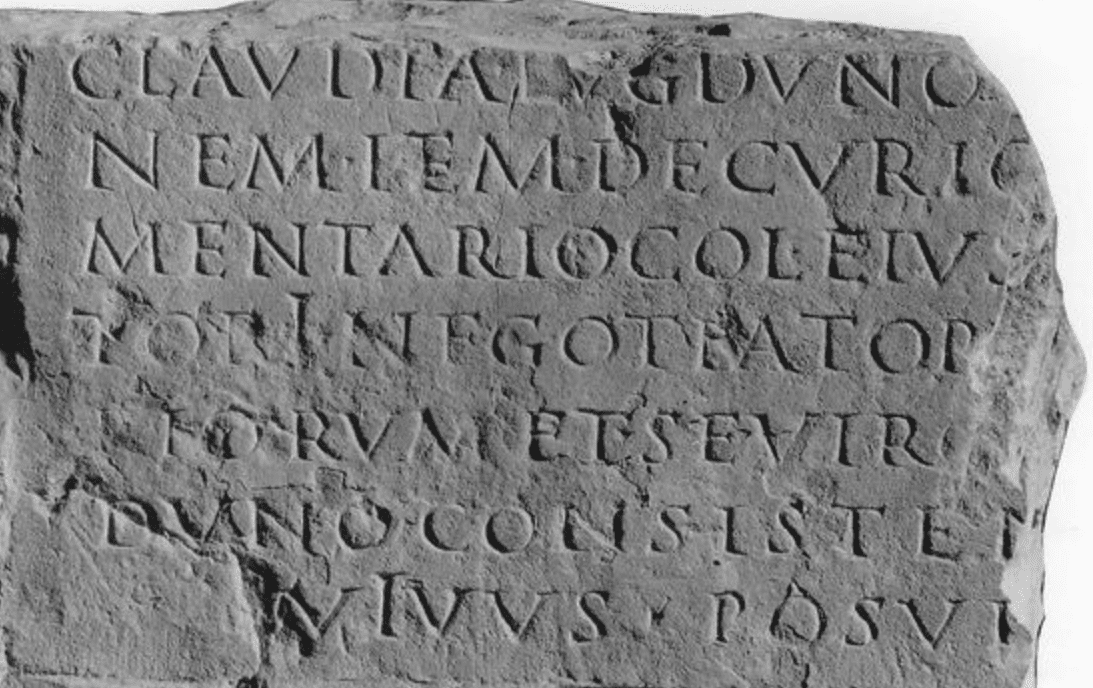
Numerous inscriptions illustrate the mobility of tradesmen and craftsmen throughout the Roman Empire, eliciting inquiries regarding their experiences, reception in host cities, and available support structures. Scholarly discourse addressing these inquiries has considerably intensified over the past few decades, revealing a prevailing inclination toward a favorable, and arguably, excessively optimistic, evaluation of the interactions between (im)migrants and local populations. A widely accepted viewpoint holds that occupational associations (collegia) admitted practitioners of specific trades irrespective of their geographic or ethnic backgrounds. Based on a close examination of select records of mobile and resident alien craftsmen and tradesmen —drawn from epigraphic, papyrological, literary, and legal sources—this presentation challenges the assumption that occupational associations universally facilitated inclusivity, emphasizing instead the complex dynamics of social closure, competition for resources, and the persistence of ethnic and occupational hierarchies in the Roman world.
Jinyu Liu, PhD from Columbia University, is the Betty Gage Holland Professor of Roman History at Emory University. Before that, she was professor of Classics at DePauw University, and has been a Distinguished Guest Professor at Shanghai Normal University since 2014. Her research interests include social relations in Roman cities, the non-elite in the Roman Empire, Latin epigraphy, the reception of Graeco-Roman classics in China, as well as translating classical texts in a global context. She is the author of the monograph Collgia Centonariorum: The Guilds of Textile Dealers in the Roman West (Brill, 2009), and coedited (with Thomas R. Blanton IV and Agnes Choi), Taxation, Economy and Revolt in Ancient Rome, Galilee, and Egypt (Routledge, 2022) and (with Thomas Sienkewicz), Ovid in China: Reception, Translation, and Comparison (Brill, 2022). Her book An Introductory Research Guide to Roman History (in Chinese) was first published by Peking University in 2014 and the second, expanded edition came out in 2021. She is the editor of a two-volume book entitled New Frontiers of Research on Ovid in a Global Context (in Chinese; Peking University Press, 2021). She was a recipient of an Andrew W. Mellon Foundation’s New Directions Fellowship (2011-2014) and a Loeb Classical Library Foundation Fellowship (2018-2019). She has been organizing the Guangqi Classics Lecture and Seminar Series in China since 2015 and has been the Principal Investigator of “Translating the Complete Corpus of Ovid into Chinese with Commentaries,” a multi-year project sponsored by a National Social Science Fund of China Major Grant. She is currently a member of the Institute for Advanced Study in Princeton for a project titled “Outsiders in Town: Mobility, Exclusion, and Negotiation in the Roman West (First – Third Centuries CE)
Jinyu Liu, Emory University